For this month’s SCoRE External Advisory Council member, we are thrilled to share an interview with Dr. Erica Holloman-Hill. Her areas of expertise lie in the fields of marine and climate science, environmental risk assessments (human and ecological), community-based participatory research (CBPR), participatory action research (PAR), and environmental justice. In 2016, she established Ayika Solutions, Inc. (ASI), a family-owned environmental consulting firm that strives to co-create and co-manage the sacred spaces where sound science and authentic community engagement merge into implementable solutions. Currently under her leadership, ASI is co-developing and supporting the implementation of practical and sustainable environmental solutions within the Southeast region of the US. We discussed ASI’s work in its sustainable sectors, Dr. E’s own professional journey, and more below.
Anna Tinoco-Santiago (ATS): Dr. E., it’s so exciting to be interviewing you so I will just dive right in! Can you tell me how you got connected with SCoRE and how the relationship formed?
Dr. Erica Holloman-Hill (Dr. E): I definitely believe the connection came through the work with WAWA (West Atlanta Watershed Alliance) while I was serving as the Director of Environmental Justice and working with Darryl Haddock. Having been introduced to Serve, Learn, Sustain (SLS), I began to work closer with Ruthie and Jenny. Then as my resilience hub work began to deepen, my relationship with SCoRE around resilience, and the work at Community Church of Atlanta became a lot clearer.
ATS: In your personal and professional role, you wear many hats and serve as a strong connector. How do you manage it all?
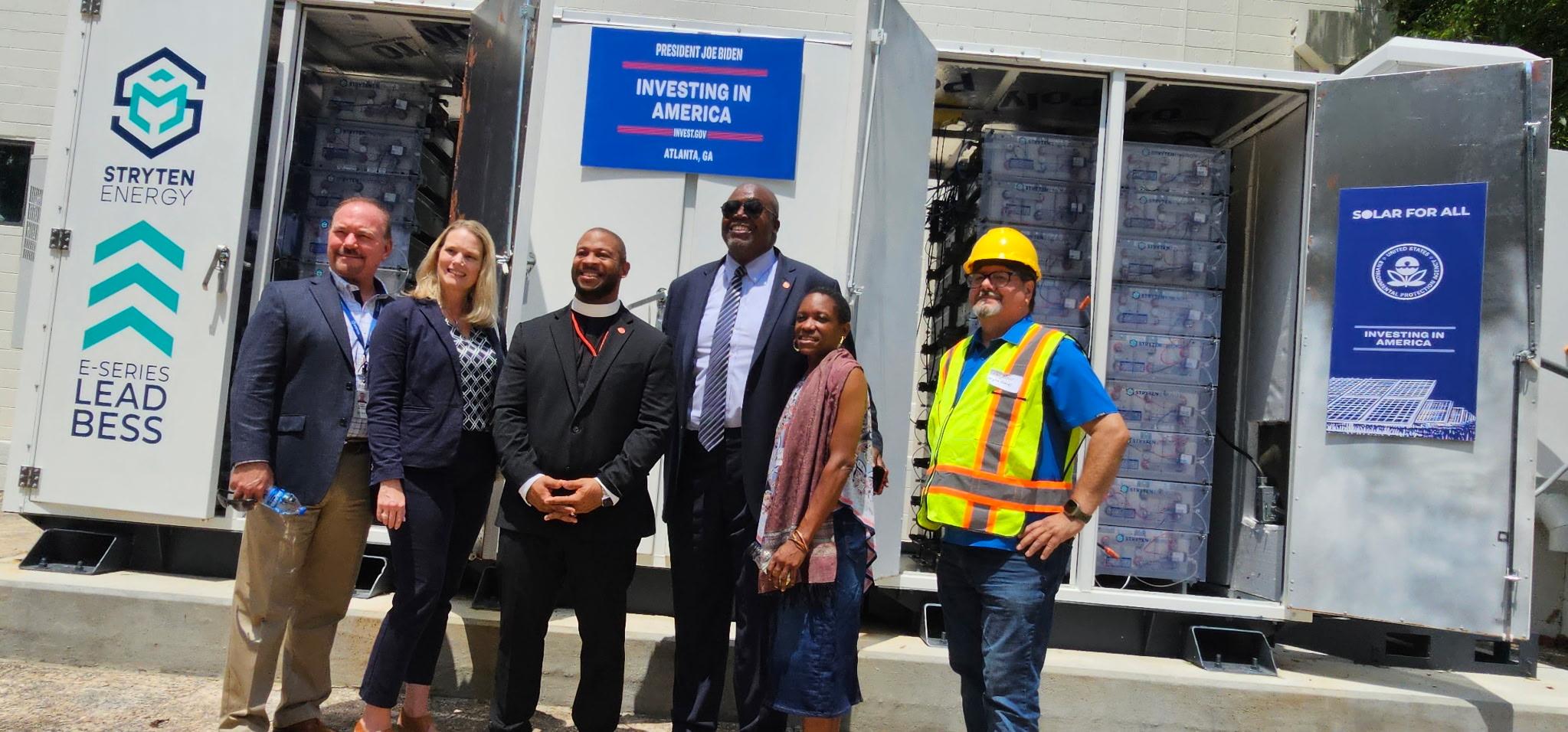
Dr. E: Growing up, there was a game where you would stack all of these hats on your head to see how many hats you could stack before they fell off. While everyone sees the stack of hats, they may not always see the one closest to my head, which is my environmental consulting firm. I'm a very spiritual person and feel that I am doing the work that God has called me to do. This work is for a purpose and for the greater good of humanity. I say that I’m working on purpose and with a purpose, and I really do think my work lies at the intersection of connecting people and making sure that communities that are most impacted don't get left behind because of lack of information. Also, I can't disconnect myself from my community. I am still very much part of the same community that I serve in terms of vulnerability and socioeconomic status. With my work in my environmental consulting firm, Ayika Solutions, Inc. (ASI), I work on behalf of clients and leverage my network to really put the focus on the work being done and the relationships being built.
ATS: When we asked you to join the EAC, a couple of years ago, why did you join, what were you working on, and has your work changed at all?
Dr. E: At the time I was working with community-based Participatory Action Research (PAR). In my work with Groundswell, I supported an engagement strategy that I call ACEIT, Authentic Community Engagement Impact Trailway. It addressed the greatest barriers that I had seen in inequitable partnerships, lack of community-driven social impact measures, and lack of community-driven positive impact. As for joining the EAC, I've always been working at the intersection of environmental justice, CBPR, and PAR, so it just made sense.
ATS: Being part of SCoRE’s EAC, how do you relate your knowledge and expertise to make recommendations?
Dr. E: Being an academician, I’m able to help translate and help others think sustainably on the equitable good of the intentions for community partners. The Community-Engaged Research Principles is a great example of being able to contribute. Some of the small things like giving an honorarium aren’t just that simple; it's all the other ways in which you show up. I like to think that I'm able to give that insight from a place where I understand what it means to be part of the academic world.
ATS: So, having served on the board for a few years, what is something that you still hope to gain?
Dr. E: Now donning the ASI CEO hat, I’m really hoping to spin off into opportunities with other GA Tech professors. Or just being able to engage the EAC’s work and move this forward at a very prestigious institution that most would not necessarily know has this depth and level of wanting to work alongside communities in an equitable way.
ATS: So, you mentioned several times you're wearing all these hats. How do you feel? What is the secret sauce to being successful at juggling it all?
Dr. E: I'm a woman of faith … And I hope that through the way that people view and see Dr. E, that they see God, that they see a way of being that restores humanity to a place that's not just about this world.
ATS: That’s beautiful! Is there a book, article, or film that aligns with what you believe or the work that you're doing that you highly recommend?
Dr. E: I would say Parable of the Sower by Octavia Butler. While it came out in 1993, the plot was set in 2024, and it speaks to the work of being earth seeds and having a future vision for my children’s children and so on.
ATS: Sounds interesting; I’ll look into it! What advice would you have for young professionals interested in following a path similar to yours?
Dr. E: Listen to your inner spirit, because that's what's connected to God. Also, working on purpose and with purpose, and not being afraid of doing the unknown. Now speaking to my younger self, I wish I'd had heard this years ago: Be comfortable with being uncomfortable, because change is uncomfortable and change is the most consistent thing that there is, right?
ATS: Yes! The most dynamic and incredible growth happens during uncomfortable times and pushing yourself beyond what you think you’re capable of. Afterwards, you look back and think, I did that, I survived, I actually did more than just survive, I crushed it! That’s great advice! Between your consulting firm work and the EAC, what do you do to relax?
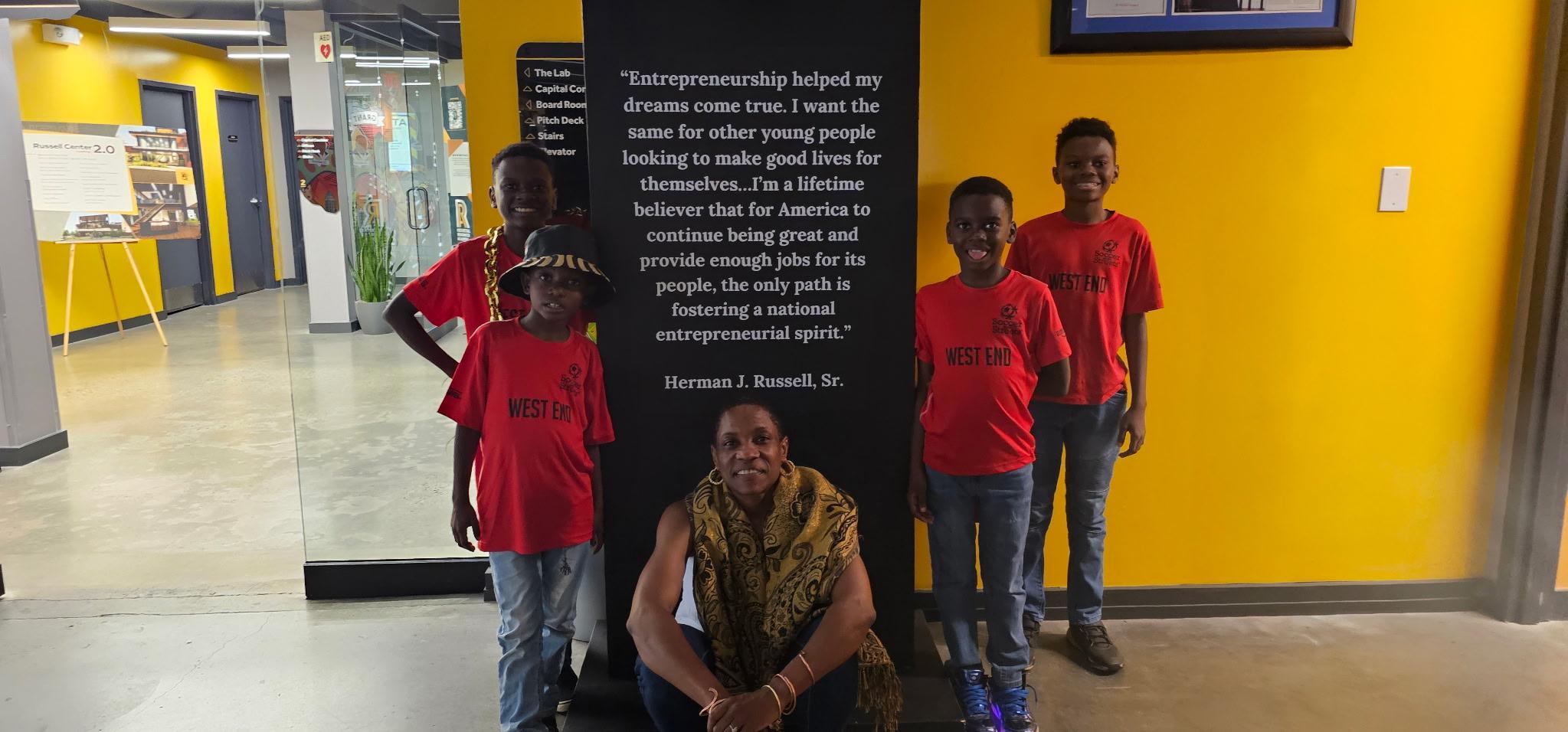
Dr. E: To be honest, that's something that I'm working on now. I've been in the process of motherhood to four boys and now, they are of age so I'm rediscovering myself and sometimes it’s just finding quiet moment to just be still.
ATS: I relate 100% to that. Having a break every once in a while, is so nice, and making the time to squeeze in a break is one of the most challenging things that I’ve been trying to manage as a working mom. Lastly, for fun, what do you do when you’re not working?
Dr. E: When I do get alone time, I try to squeeze in family time, reading, being out in nature, and catching up on Netflix movies.