
During my Sustainable Communities Summer Internship with SCoRE working with the Southeast Communities Energy Futures Academy (SCEFA) program, I was able to experience two exciting and informative events. The first was a visit to GE Vernova’s gas turbine manufacturing facility in Greenville, South Carolina with SCEFA's sister program, the Carbon Management Fellowship Program. The second was a weekend at the 4th annual Southeast Environmental Justice Summit with both the SCEFA and other Sustainable Communities Summer interns. Both experiences taught me about the state of the energy industry and its transition for a more sustainable future. I learned from experts across different fields, broadened my network and community, and had plenty of fun.
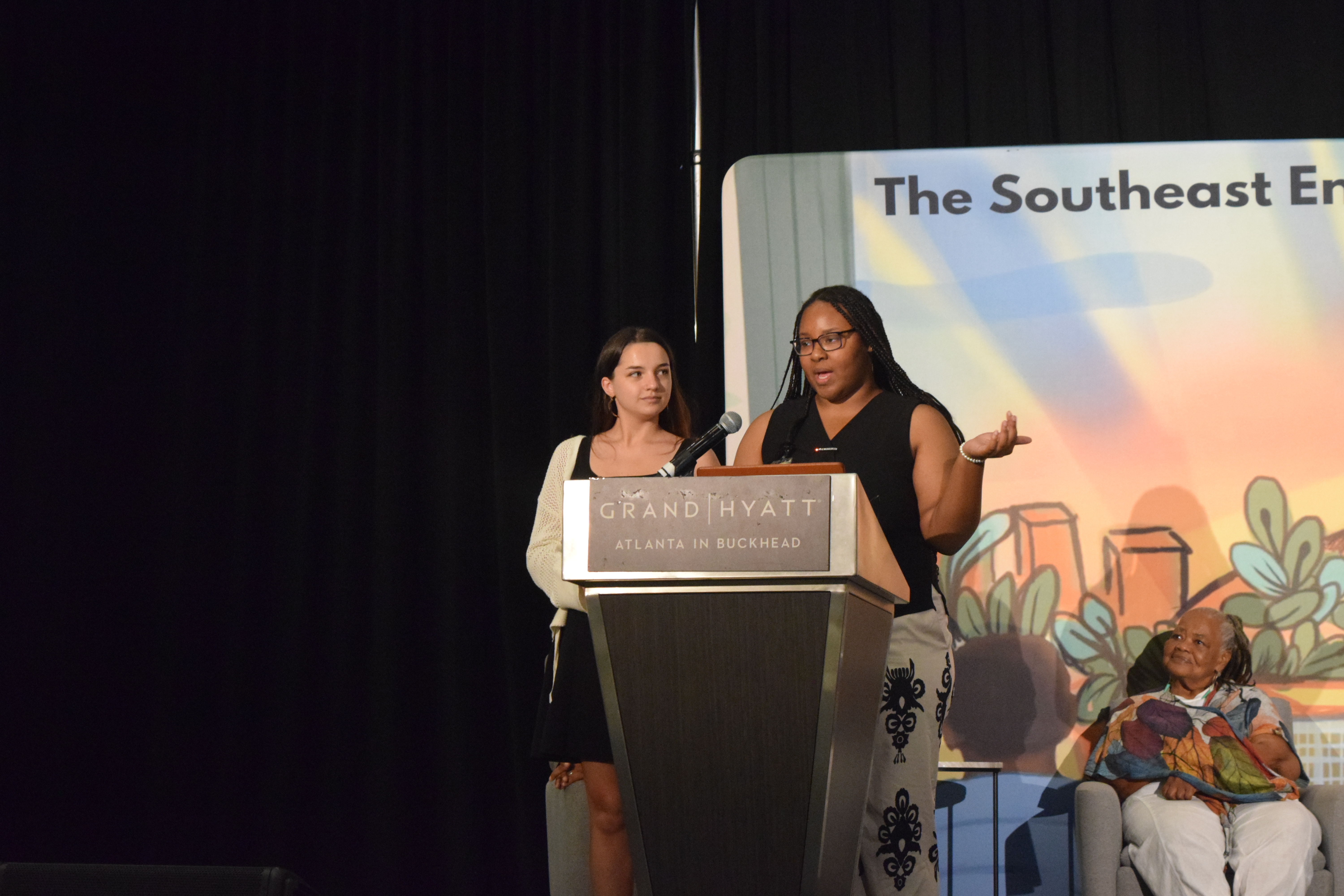
During the weekend of July 13th, the Sustainable Communities Summer interns had the opportunity to attend the 4th annual Southeast Environmental Justice Summit hosted by Harambee House, and organized by Pamela Fann, owner of Integrated Solutions and part of SCoRE’s External Advisory Board. While all of us had the experience of listening to a plethora of different speakers with unique sessions to showcase, some of us were the speakers with sessions to lead.
Rayeed Zaman worked directly with Pamela and kicked off the conference with an ice breaker that had us think about the environment, its challenges in the Southeast, and what intergenerational movement building could look like. In addition to his work behind the scenes at the conference, he also helped facilitate an interactive session about stakeholder mapping, showcasing the work he and members of a SCoRE project, Southeast Community Energy Futures Academy (SCEFA), had been developing. He noted how he enjoyed the conference, spending time networking and connecting with people in the tech industry, his primary field of focus, and others who offered him useful insight. Because he attended the event for its entire duration, he attended many of the interactive sessions SEEJ offered, with one of his favorites being a calligraphy session, hosted by our SCoRE intern, Saanvi Singla.
After the opening session concluded, we heard from Dr. David A. Padgett who led a hands-on workshop focused on community participation in climate change research related to water management data and mapping. This interested Riya Desetty, Cameron Lancaster, and myself, interns who all have experience working with geographic information systems (GIS) mapping, gained insight into how we can use what was discussed in our future work in sustainable cities, city planning, and civil engineering, respectively. This session highlighted one of the themes of the conference and much of the work that we do at SCoRE: community building. To do our part for the day, the interns in attendance went to lunch where some of us were able to meet people we were working with online for most of the summer, connecting and discussing how our time has been in our respective cities throughout the Southeast.
On Saturday, some participants of SCEFA, a project that many of the SCoRE interns worked on, offered attendees knowledge about two emerging energy transition technologies, their uses, concerns about them, and their place in the Southeast. Of these presenters, Margaret Hankins and Younger Burton, taught us about asset mapping in rural counties in Georgia, showcasing their work with GIS and teaching the audience how to think about what is right with their communities and the opportunities they have because of their assets, not only what is lacking. Both students expressed excitement and the rewarding nature of their presentation, with Younger reflecting that, “Presenting our project gave me confidence in the work we accomplished and allowed me to see the impact that GIS and community partnerships can have.”
The SEEJ conference was separated into two tracks: a main track for all attendees and a youth track targeted at people aged 7 to 25. Much of the knowledge gifted to us by our SCoRE interns took place on the youth track schedule. To help us navigate the day, we were given a “Youth Track booklet”, full of scheduling details and interactive activities, created by Riya Desetty, a SCoRE intern working with the Center for Education in Science, Math, and Computing. She noted that she enjoyed seeing her booklet be used and interacted with by many people, leading her to interesting sessions such as one teaching us about sustainable fashion. This inspiring session drew attention to the ways we can make more conscious choices in where we buy our clothes, how we can maintain them, and how making small sustainable actions in the ways you express yourself can be impactful. This session and others broadened the idea of sustainability as something more than engineering and scientific solutions that often bring forth feelings of helplessness to change that many people feel. Another session that expanded on this idea was one led by Saanvi Singla.
Saanvi’s session showcased her teaching prowess in a session about calligraphy, demonstrating how the visual representation of our words can be a form of expression. During her session, she taught a group the basics of calligraphy, how it can be personalized and guided them in their hands-on experience of using the writing art on their own. Both she and Cameron Lancaster discussed an important aspect of the conference that many of the youth session leaders, including herself, got right: there are connections to be found between sustainability and the arts. Cameron took away that there are ways to integrate sustainability into work that isn’t always associated with it. In her session, Saanvi emphasized how “art can be an expression of passion”, with such passions being the groundwork and motivation for much of the work both we at SCoRE and those in attendance of the conference participate in every day.
On Sunday, Angel Zheng, an intern for Migrants for Sustainability, also encouraged an audience to follow and express their passions during a session about leadership. Her workshop focused on teaching students how to start their own chapters of organizations they care about through an introductory presentation and an activity that taught us how to create a pitch for a project surrounding the United Nations Sustainable Development Goals. She noted how her activity “got participants involved in problem solving and brainstorming the process to successfully enforce their visions”, marking the session as a success.
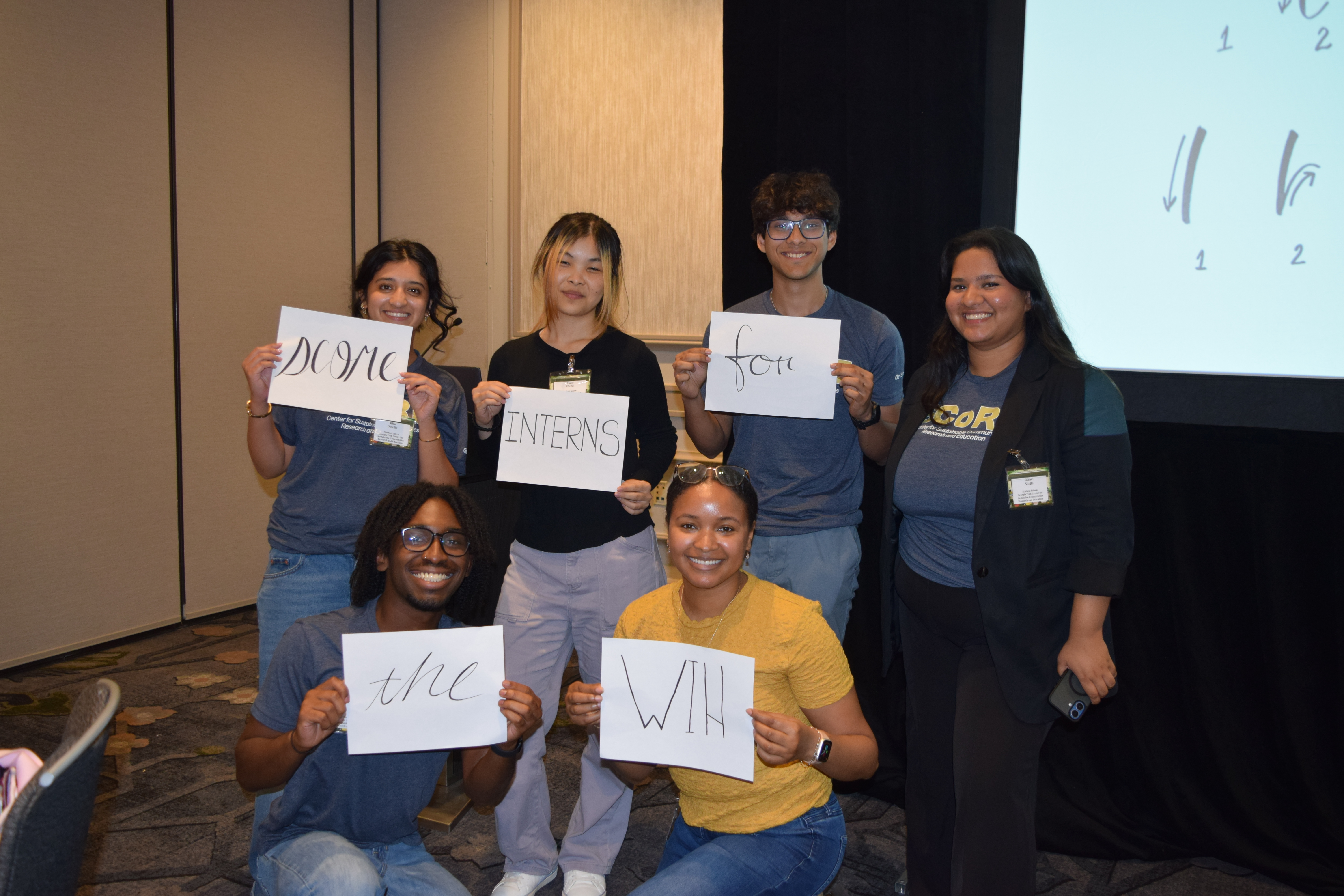
This weekend served as an unforgettable experience for our SCoRE interns where they both taught and learned from one another and others in the Southeast, broadening their network and perspectives, while also having fun. Each presenter did an excellent job and learned more about themselves, each other, and their work in a knowledge exchange possible because of the Southeast Environmental Justice Summit and its organizers.