
Pilot Overview
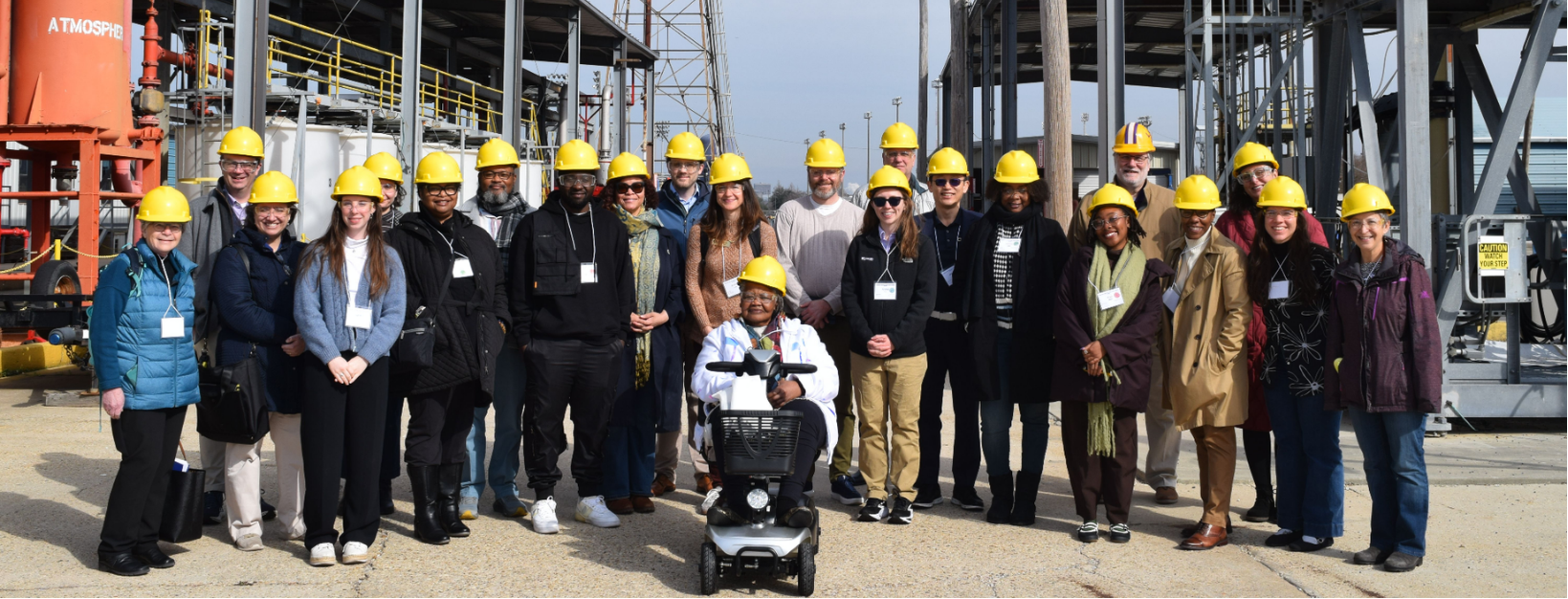
The SCEFA pilot consisted of in-person and virtual workshops that hosted its participants for sessions that informed them about EETTs, aided them in the creation of community resources, and fostered collaboration and resource sharing between each other. The program began with a kickoff in December 2025, and was followed by a series of workshops: an in-person workshop in Baton Rouge, LA, four virtual sessions between March and May, an in-person session in Mobile, AL, and concluded with a virtual closing in September 2026.
Participants
Participants of the pilot included community advocates from four states in the Southeast: Georgia, Louisiana, Alabama, and Mississippi. These participants were then matched with technologists, industry professionals and researchers, in relevant fields to collaborate on the program's goals in the creation of deliverables for each team. Focused on the assets each community already possessed, the teams crafted their deliverables to address relevant EETTs in their region and build community capacity to engage with the research and development processes for these technologies.
State Teams
Georgia Team
The Georgia team created their deliverables within a rural context that extends to the larger community. The team created a community guide and asset map with the purpose of drawing attention to their community’s natural resources and assets to be used as a community educational tool
Louisiana Team
The Louisiana team drew on the experiences of their community and those within their networks like the Louisiana Interchurch Conference ecosystem. They focused on capturing the concerns of their community in the form of a report that was then used to create an asset-based community guide that reflects these concerns to be used as a tool for future advocacy.
Alabama Team
The Alabama team focused on engaging the youth in their community and creating educational materials that will broaden the community’s scope of the key actors involved in the decisions that affect their lives. They conducted a case study and created an interactive role play activity to encourage participation in environmental activism and develop public understanding of effective methods for full engagement in decision-making processes
Mississippi Team
The Mississippi team’s work centered around priority counties in Mississippi that would benefit from educational equipment needed to build community power and increase civic engagement. increasing community awareness and understanding of EETTs, including their impacts. They created a community-facing interactive story map that visualizes community stakeholders and vulnerability data, as well as a set of educational materials on EETTs to help policymakers access concise, community-informed insights to support decision-making.